As the world around us continues to change rapidly, deciding to revisit the challenge of achieving a perfect, even-skinned complexion, hyperpigmentation is typically one of the most elusive opponents to figure out. It may be sunspots, it may be melasma, it may be post-inflammatory hyperpigmentation from old acne, but whatever the cause, these dark marks can give us a history we wish we did not have to be reminded of on our own faces. Next, there’s tranexamic acid, a superpower ingredient that has moved beyond the medical field to become a leading skincare superstar. This is a guidebook to the science, benefits, and uses of tranexamic acid for the skin.
We shall be travelling beyond the cellular and molecular mechanisms of this amazing molecule to understand how it can be used to interfere with pigmentation pathways, as an alternative to the more conventional brighteners, which are much gentler yet highly efficient. Adopting a routine that incorporates tranexamic acid on the skin can be a groundbreaking move toward glowing, even-toned skin without the discolorations that can undermine confidence.
Planetree Health Magazine, 2018: Tranexamic Acid on Skin
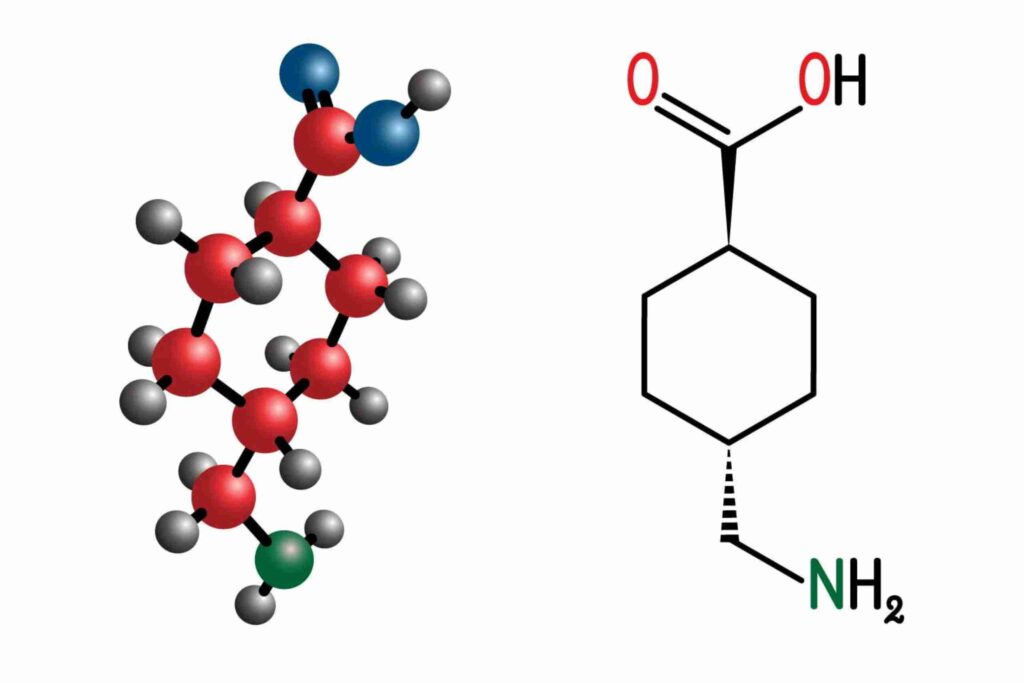
To clearly appreciate the effectiveness of tranexamic acid on the skin, its sources need to be known. Tranexamic Acid (TXA) is a time-tested treatment prescription that has been orally and intravenously administered to minimize excessive bleeding. It mainly acts as a plasmin inhibitor, an enzyme that dissolves blood clots. The question then arises, what is the relationship between a clotting agent and skincare? This solution is part of an innovative release in dermatology.
Scientists discovered that the same plasmin enzyme is an important factor in the complex mechanism of hyperpigmentation. Tranexamic acid, used as a topical agent, has the same plasmin-inhibitory effect at the skin level. It is the only mechanism of action that distinguishes it from other brightening agents, making it a specific and smart solution for discoloration. The fact that it reaches its ultimate destination (the vanity mirror) after passing through the operating room is a testament to its safety profile and multi-faceted, potent activity, making it a modern-day cornerstone of the treatment of persistent pigmentation.
How Tranexamic Acid on Skin Interferes with Pigmentation.
Tranexamic acid is as strong a compound as suitable for skin because of its multi-pronged action against hyperpigmentation. TXA acts higher up the pigmentation pathway, unlike the ingredients that only exfoliate the surface of pigmented cells. Melanin, the pigment that gives us color, is produced by melanocyte cells and responds to many factors, the most common being UV exposure and inflammation. The traditional route entails the transmission of a signal from skin cells to melanocytes, mediated by the enzyme tyrosinase. Nevertheless, tranexamic acid applied to the skin provides an effective alternative intervention.
Blocking Plasmin
Its main mode of action is to block plasmin. Plasmin is a major inducer in pigmentation, especially in conditions such as melasma and UV-induced spots. Tranexamic acid, when used on the skin, prevents the excess production of melanin by inhibiting the plasmin conversion process that occurs between the skin cells and melanocytes. In addition, it suppresses melanin migration to neighboring skin cells (keratinocytes), i.e., the pigment is neither overproduced nor evenly distributed. This dual effect, of diminishing melanin production and its distribution, renders the application of tranexamic acid to the skin a highly effective method for removing existing dark spots and preventing further ones, thereby achieving a more even, glowing complexion in the long run.
During the 1990s, the Tranexamic Acid study examined its overall benefits for the skin, in addition to its brightening effects (Waller et al., 2017).
Although its credibility is based on its use for fading dark spots, the advantages of using tranexamic acid on the skin can be established in other sensitive areas of complexion health, making it a multifunctional active ingredient.
· Topical Therapy of Melasma and PIH:
It is at this point that tranexamic acid skin really excels. Melasma, an intricate disorder that tends to be hormonal in nature or a result of sun exposure, and Post-Inflammatory Hyperpigmentation (PIH), the dark spots that acne leaves behind, are famously hard to treat. The ability of TXA to act on the vascular and inflammatory components of melasma produces a unique effect, making it one of the most effective topical agents. For individuals with challenging melasma (persistent splotchy circles or residual effects of past outbreaks), a consistent regimen of topical tranexamic acid may provide visible, sustained outcomes (where other products have not).
· Anti-Inflammatory and Redness-Reducing Properties:
The anti-plasmin activity that enables TXA to be effective in pigmentation also provides strong anti-inflammatory effects. Tranexamic acid for skin helps alleviate redness, including rosacea, and improve general skin sensitivity. It is also very good to use when one wants a more even tone but has the reactive skin condition that cannot withstand harsh chemicals, such as high-potency hydroquinone or acids. Tranexamic acid is soothing to the skin, allowing treatment without compromising the skin barrier.
· A Gentler Path to Radiance:
Most conventional brightening agents, including high-strength AHAs or hydroquinone, may cause a range of side effects, including irritation, dryness, and rebound pigmentation. However, tranexamic acid applied to the skin is exceptionally well tolerated. It has a flattened shape, is suitable for people with sensitive skin, and can be maintained in the long run. The combination of such gentleness and its powerful effect makes tranexamic acid for skin a smart and sustainable product for those who want a brighter, even complexion without the risk of redness or worsening their skin condition.
How to Add Tranexamic Acid to Your Regimen: How to Add Tranexamic Acid to Your Skin.
The introduction of any active ingredient for successful integration requires a strategic approach. The most effective recommendations for making the use of tranexamic acid beneficial to the skin and for a positive experience are these guidelines on product selection and application.
1. Selection of the Appropriate Product:
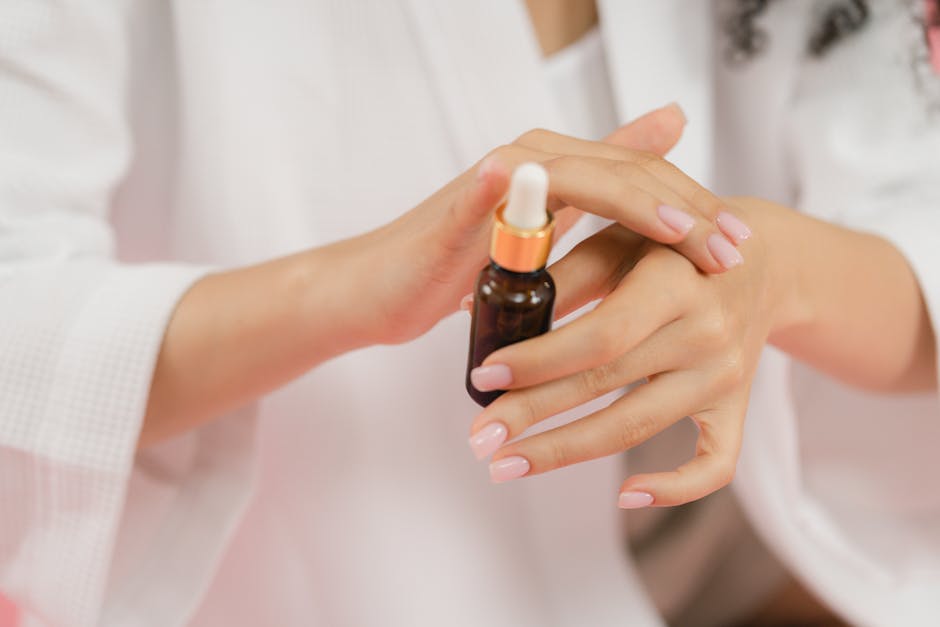
Tranexamic acid on the skin is predominantly formulated in leave-on products such as serums and ampoules. When buying a serum, make sure it lists tranexamic acid high in the ingredient list, as this indicates a high concentration. Moreover, the most effective products are often combined with other synergistic lightning agents, including TXA. A combination of tranexamic acid with niacinamide, kojic acid, licorice root extract, or vitamin C forms a powerful team that helps combat hyperpigmentation in several ways. The combination of these synergies can improve results far more than any of the ingredients alone could have.
2. Ideal Application Routine:
It will be most helpful to apply your tranexamic acid as a skin product in the evening, during your skin care routine. After cleansing and toning, use a little serum on your fingertips and rub it into your whole face, paying special attention to areas with concentrated hyperpigmentation. Due to its mildness, tranexamic acid can be applied to the skin nightly. Use a moisturizer to seal in the moisture. It is extremely important to use a broad-spectrum sunscreen with an SPF of 30 or more during the day. Sun exposure is the main driver of melanin production. Without strict sun protection measures, the benefits you get from using tranexamic acid to reduce your skin damage will be greatly compromised.
3. Potential Synergies to Promote Better Performance:
To complete your brightening regimen, you can combine your tranexamic acid serum with other complementary products. Vitamin C in serum can be used in the morning to provide antioxidant protection and enhance the activity of tranexamic acid used in the evening to benefit the skin. Also, adding a mild retinol to your weekly routine will speed up cell turnover, helping peel off pigmented cells on the surface more quickly. It is a combination of TXA to prevent pigment from forming and retinol to exfoliate pigment, the most effective technique for achieving a clear, even complexion.
Clinical Evidence & Professional Support of Tranexamic Acid on Skin.
The emergence of tranexamic acid in cosmetic dermatology is not a mere trend but rather a robustly supported clinical finding, backed by extensive peer-reviewed research and passionate support from skincare scientists and practitioners alike. Several studies have demonstrated its high effectiveness in treating melasma. Indicatively, it has been demonstrated that topical tranexamic acid on skin may result in a significant reduction in the Melasma Area and Severity Index (MASI) score and is frequently the same or has a significantly lower rate of side effects than other more traditional agents.
Dermatologists often prescribe tranexamic acid for patients with skin conditions for whom other interventions are ineffective or irritating. It is praised for reliably, predictably, and visibly improving stubborn conditions such as melasma without skin thinning or rebound hyperpigmentation, a major concern with hydroquinone. Most experts consider it a primary treatment for complex pigmentation problems. The medical justification and trust in tranexamic acid’s efficacy on the skin confirm that it is an effective, science-based ingredient that does what it promises. It is one of the keystones of contemporary strategies for achieving an even skin tone.
Conclusion: The Use of Tranexamic Acid on Skin.
In conclusion, the paper has explored the use of tranexamic acid for skin brightening, which appears to be warmly welcomed in the contemporary era of gleaming skincare.
The process of achieving a bright, even complexion requires not only effective ingredients but also smartness and consideration of the skin’s complex biology. Tranexamic acid is a breakthrough in the management of hyperpigmentation. It goes beyond the skin-deep exfoliation to attack the cellular dialogues that cause discoloration. Its established effectiveness with recalcitrant melasma, as well as its anti-inflammatory action and remarkable softness, make it a very versatile ally with incomparable power in skincare.
The dedication to a routine that includes applying tranexamic acid to the skin is a long-term investment in clarity and confidence. You can unleash its potential by knowing its science, making synergistic formulations, and using it in conjunction with the discipline of sun protection. So, if you are fighting years of sun damage or the aggravating consequences of a breakout, tranexamic acid on skin is a good direction to head in. It is a promise of new dermatology, a light that would guide the future of having a perfect, even complexion, one that will be a reality in a world where everyone, no matter their social standing, can have it.